
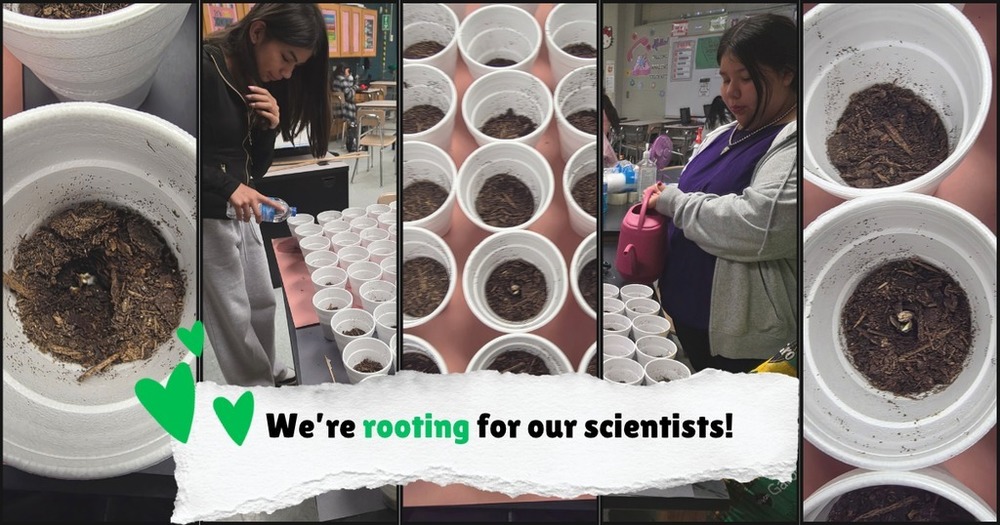
While Earth Day is celebrated globally, the students in Mrs. Gonzalez’s sixth grade science class are bringing the celebration directly to their desks. In a hands-on exploration of the natural world, these young scientists have converted their classroom into a thriving laboratory to investigate the complex mechanics of local ecosystems.
The project focuses on the fundamental relationship between biotic and abiotic factors. By planting and monitoring their own sprouts, students are gathering data on how living organisms depend on non living elements such as soil nutrient density, water cycles, and light exposure to sustain life.
This "living laboratory" allows students to move beyond textbooks and observe the delicate balance of nature in real time. By documenting the growth of their plants and the impact of environmental variables, the class is gaining a deeper understanding of how every component of an ecosystem plays a vital role in the survival of the whole.
The timing of the project aligns with global Earth Day initiatives, emphasizing the importance of environmental stewardship. By studying the world one sprout at a time, students are learning that even small changes in non living factors can have a massive ripple effect on the living world.
Mrs. Gonzalez’s students are not just growing plants; they are growing their investigative skills and developing a lifelong appreciation for the environment. This hands-on approach ensures that the lessons of Earth Day stay with these students long after the seeds have taken root.
It is an inspiring example of how science is blooming every day at our school!